Comorian
We Are an Island, but We’re Not Alone

There’s not a lot of music that makes it way outside of Comoros, a tiny country made up of three islands just north of Madagascar. There’s none that was covered or featured in the venerable Rough Guide series to my knowledge, and the RYM database lists only 18 albums from musicians born there. Not hard to figure out why that is. Wikipedia estimates that Comoros has the second-lowest GDP of any African country, and an estimated GDP per capita income of $700 places it among the world’s poorest. Reports of the country all talk to extreme poverty rates (CIA’s World Factbook estimates 44.8%), poor education levels, and how a large portion of its GDP comes from remittances. The overwhelming majority of Comoros’ labour force works in agriculture, which yields their main exports of vanilla and cloves—i.e. spices and not actual food, which they have to import—and because of limited opportunities, many of its individuals make their way to the neighbouring archipelago of Mayotte in the coast of Mozambique as a means to get to France. It’s estimated that half of Mayotte’s population comes from Comoros, and that’s just the number of documented migrants.
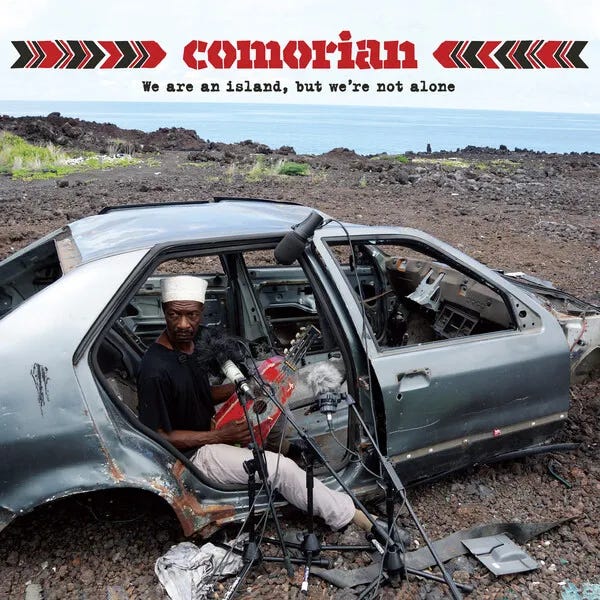
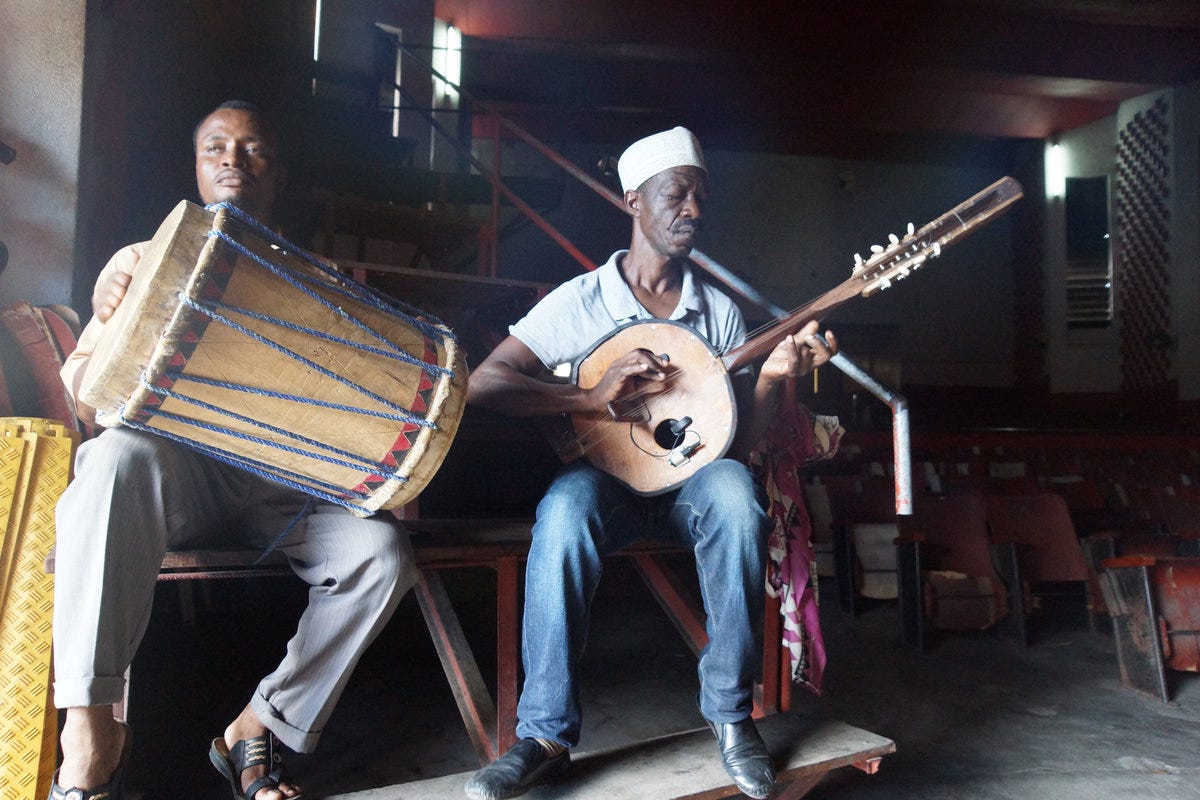
As I’m running the risk of sounding like a school assignment, I’ll stop there, but I’m a firm believer that context can only enrich, which is confusing because people keep asking what the point of music writing is. In 2021, as part of its Hidden Music series, Glitterbeat released the debut album of Comorian, We Are an Island, but We’re Not Alone. Comorian—the word to describe someone from that region—is the name of two musicians, Soubi and Mmadi, who alternate vocals, but both play the ndzendze, a box zither string instrument native to that country. Though there is a percussionist involved sometimes by the name of D. Alimzé, the nimbly plucked ndzendze functions as both the rhythmic driver and melodic lead that ensures that, for example, the 11-minute track “I’ve Come to the City (Now My Shoes are Repaired)” never gets stale. Meanwhile, the ndzendze lines of “Bandits Are Doing Bad Deeds” are liquid gold, or at least, they would shimmer more brightly if this were recorded in a richer African country like Mali.
On that note, something I appreciate producer Ian Brennan for here—I mean, besides the absurd journey he undertook to get to Comoros in the first place (six flights! Meanwhile, the word “layover” strikes terror in my small heart), and besides finding these two musicians by complete happenstance when he was originally after a ndzumara player, and besides recording them and releasing it for the world—is that he translated the titles in English so we could better understand these vocals without a translated lyric sheet handy. “Please Protect My Newborn Child from the Spirits.” “Prayer for a Better Life.” “My Friends Went Abroad & Were Swallowed by the Waves.” The lattermost of which reminds me of the stat of the number of Comoros people that leave their home for Mayotte. Even the album title is memorably declamatory.
The songs where Mmadi sings lead are the highlights. Soubi’s vocals are grounded and smoother, whereas Mmadi gleefully abandons language and pleasurable concepts such as “melody” or “hitting the right notes” as he loses himself to inner demons. He pours his heart out in the climax of “Please Protect My Newborn Child from the Spirits” in a way that sounds like he’s genuinely crying while also shaking his head such that his vocals devolve into a series of buh-buh-buh consonants. “Salvation” might be the best song here that Soubi takes lead, and I think that’s only because Mmadi helps out on backing vocals. Compare the two one-minute interludes. Soubi’s “Prayer for a Better Life” is a minimally-arranged blues plea set to some spare percussion. By contrast, Mmadi’s “America, Crazy” might be my favourite track here, as Alimzé’s brisk percussion sets the pace for an insane vocal performance consisting of screams that sounds like he’s glitching out like a malfunctioning machine, delivering on the promise of its title.
In a way, Comorian’s set-up of two vocalists and instruments native to their country reminds me of Madalitso Band, except those boys from Malawi made songs that resembled pop music in their infectious hooks and energetic grooves, whereas this music is unadorned blues to an extreme the likes of which I haven’t heard since, well, actual blues to be honest! I’m really hoping Ian Brennan makes his way back to Comoros in the near-future, finds these two cats again and helps them make another record.