Imarhan
the ones who care about me

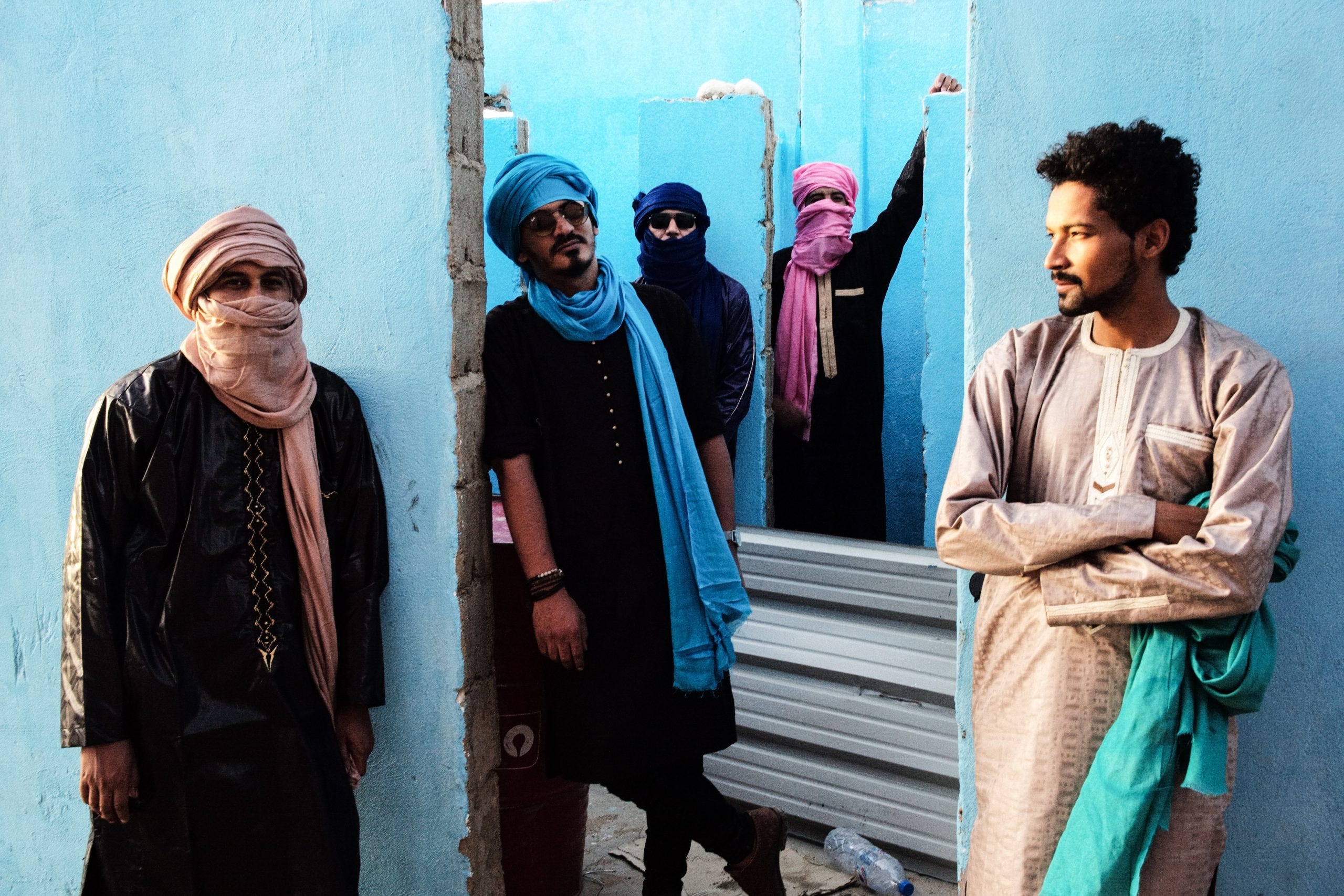
Consider Imarhan to be Tinariwen’s little brother. Both are Bands formed in Algeria that play the genre called tishoumaren, colloquially called desert blues that is performed across by the Tuareg people across the Sahara. Whereas Tinariwen formed in 1979 and had been releasing music since the 1990s, Imarhan formed only in 2006, and released their debut album ten years later in 2016. But with the age discrepancy comes speed: they regularly out-tempo the typically-weary Tinariwen, and the speed of the groove inherently means that they’re more danceable too. Actually, the two are closely related: Tinariwen bass player Eyadou Ag Leche is Imarhan’s frontman Iyad Moussa Ben Abderahmane (who goes by Sadam)’s cousin, and Sadam played with Tinariwen on tour when Tinariwen members were unable to due to the conflict in Mali.
“We have always been listening to music, to the music of Tinariwen especially, and in 2006 we decided to create our band, Imarhan. The most important thing in the creation of the band is that it is a big friendship of music lovers and we come from the same city, from the same area, and since 2006 we have been playing all the time, all together. When we created the band it was originally called Imarhan N’Tinezraf. Imarhan means ‘the ones who care about me’, the very close friends. N’Tinezraf means ‘the desert’, a very dry desert. So Imarhan is the most important name, and that is why we kept this name after all. The main thing is the friendship” —Sadam, in an interview with The Quietus
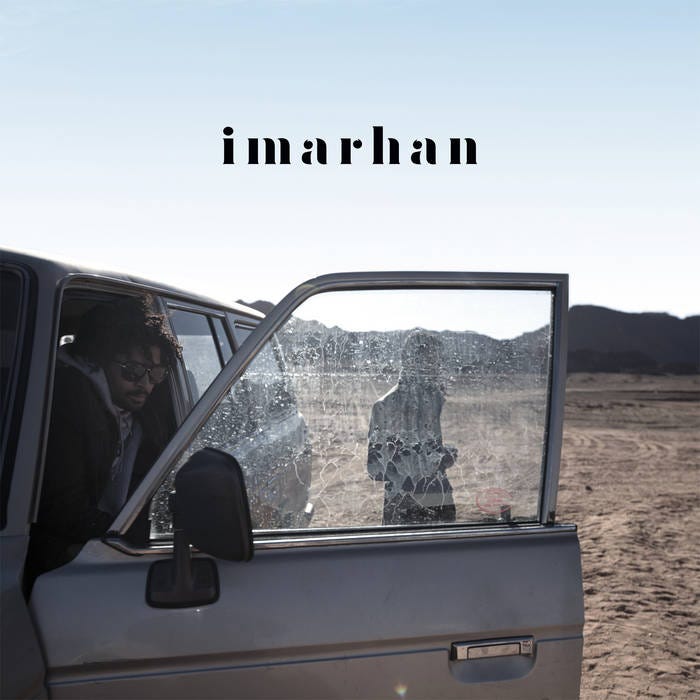
Debut album Imarhan arrived after ten years of playing together and honing their skills, and once comfortable, the band travelled to Montreuil, a commune in Paris to record their songs in a comfortable studio, tapping Eyadou Ag Leche to help write and produce which explains why the album has the same energy as does Tinariwen’s Tassili. If you want a taste of their speed, check out second track and lead single “Tahabort” with the twitch-funk of the guitars: instruments are slowly introduced one after another such that the song feels like a 3-minute climax, including call-and-response vocals, a cowbell that helps frame the beat, and then a wonderful guitar transition that leads to that high-pitched scream and the return of the almighty funk. If you want a taste of their soul, check out “Ibas Ichikkou” that immediately follows, where the lurchy rhythm feels like wandering through the desert while exhausted, balanced out by an upbeat guitar in the alternating sections. And if you think the song doesn’t have enough juice to warrant six minutes, they prove you wrong: there’s additional textures of what sounds like stars twinkling overhead and the alien guitar—almost like a synth—that harmonizes with Sadam’s voice. If you want to listen to desert blues at its most communal, check out “Idarchan Net” where the acoustic guitar vibrantly pops out and the “Hey… Hmm…” hook—simple and effective—erases the language barrier and invites all listeners to sing along. If you want loud electric guitars, check out the title track/song named after the band, the shot in the arm placed when the album needs it most (the second side opener). As far as 2016 rock music goes, I give the edge to Drive-by Truckers, but this rocks harder and faster than did most of the acclaimed music that passed off as “rock” music that year.
The highs from Imarhan are higher, but I wouldn’t begrudge anyone who thinks sophomore Temet is the stronger album. The production is more modern feels as if these desert travelers are now ready to meet the world. The guitars from the three-man frontlines of Sadam, Hicham Bouhasse, and Abdelkader Ourzig are all louder than before, evidenced by the hooky riff that leads us in on “Azzaman,” while bassist Tahar Khaldi is set to throttle, especially on “Tumast.” “Ehad Wa Dagh” feels like the closest any Tuareg has ever come to punk rock, at least in speed, as the roaring call and response of its guitars are set to a blazing tempo. The guitar solo near the end starts heavy in fuzz and ends somewhere in the sky as their most psychedelic cut at this point. “Alwa” doesn’t let up the intensity thanks to percussionist Haiballah Akhamouk and the vocal harmonies helping out the choruses that are amongst the most communal this band has ever sounded. And closer “Ma S-Abok” starts off with one of Sadam’s most contemplative performances, the rest of the band holding back until 90 seconds into the song and reminding him of their bonds together — at least, that’s how the song feels like.
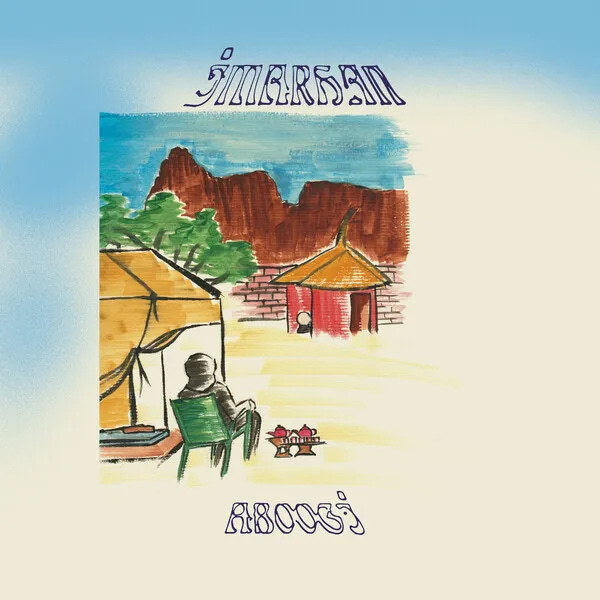
Third album Amoogi sounds far more tired, the youthful energy of their first two albums wore down, appropriate for an album presumably recorded during COVID. That the album ends with a collaboration with Super Furry Animals’ frontman Gruff Rhys doing his best Damon Albarn impression disappoints because up until this point, Imarhan never bothered with working with western musicians, although who can blame ‘em: that’s how Tinariwen and Bombino broke through, and Imarhan never enjoyed the same international attention — but then why only partner with one artist, and one that hasn’t enjoyed any solo attention ever? Maybe Rhys singing in Welsh was their sly way of having their cake but not eating it too. They sound tired here, the sapped-out spirit never better exemplified than on “Tamiditin,” which Tinariwen member Mohamed ag Itlal has a hand in, recorded a year before ag Itlal passed away. “Tindjatan” has that hypnotic blues-based guitar that they’ve always had—that ringing climb at the 2:18 mark—but the overall ‘vibe’ of this album is fatigued, and alas, forgettable.
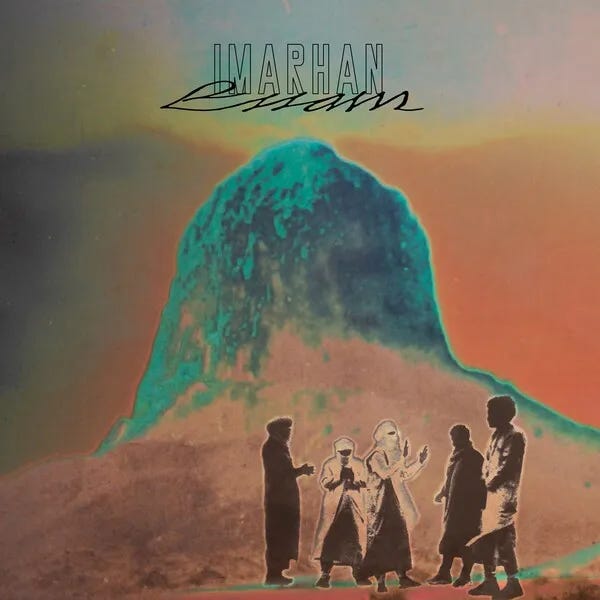
They make their biggest change yet for fourth album Essam (“Lightning”), which dropped in January of this year that didn’t even make a blip on the western radar. Sure, it leans harder on the crossover appeal than did Aboogi, but the results are a stunningly modern and even psychedelic effort from the grounded band; the cover, late-60s psych rock as imagined by five desert musicians, is very apt. The charge that all tishoumaren sounds the same no longer applies. Emile Papandreou (of French duo UTO) collaborated with the band in their home turf of Tamanrasset, bringing in synthesizers that you would think would be at complete odds with the band’s natural sound. You would think.
The 6-minute ballad “Tamiditin” starts with the wobble of a synth as acoustic guitars slowly enter the frame, and it feels like the song is a camera panning across the desert, especially when it reaches the 2-minute mark and the vocals and guitars all stop and all we’re left with is the ambient keyboard/synth. Had “Tamiditin” been cut on a previous album without Papandreou or producer Maxime Kosinetz, it would’ve been fine, but here, it feels lusher, fuller, and better, and frankly their best of that form since “Ibas Ichikkou” ten years prior. The same applies to closer “Assagasswar” whose 8 minutes gently wash over the listener thanks to the ambient textures.
Sure, I admit that the electronically-enhanced drums of “Azaman Amoulay” felt off to me when I first heard them, but ultimately, the complaint I’ve heard for many years is that tishoumaren all sounds the same, and so it seems hypocritical to criticize the band for trying something outside the box, especially when it’s not the drums you should be sinking your ears into, it’s the twinkly synth textures between the guitars that make it feel like lying on the sand and watching the stars at night. Thankfully, they don’t go overboard on the electronics: it’s still mostly the same wedding band we’ve always known.
Imarhan - A-
Temet - A-
Amoogi - B
Essam - B+
Really solid breakdown of their evolution. The observation about Essam bringing in synths without losing their core sound is spot on, alot of world music acts struggle with that balance. I'm curious tho if the collaboration with Gruff Rhys felt tacked on or if itintegrated better in the album's flow than you're giving credit for.