
Thundercat
Heartbreaks, setbacks, breakups, makeups

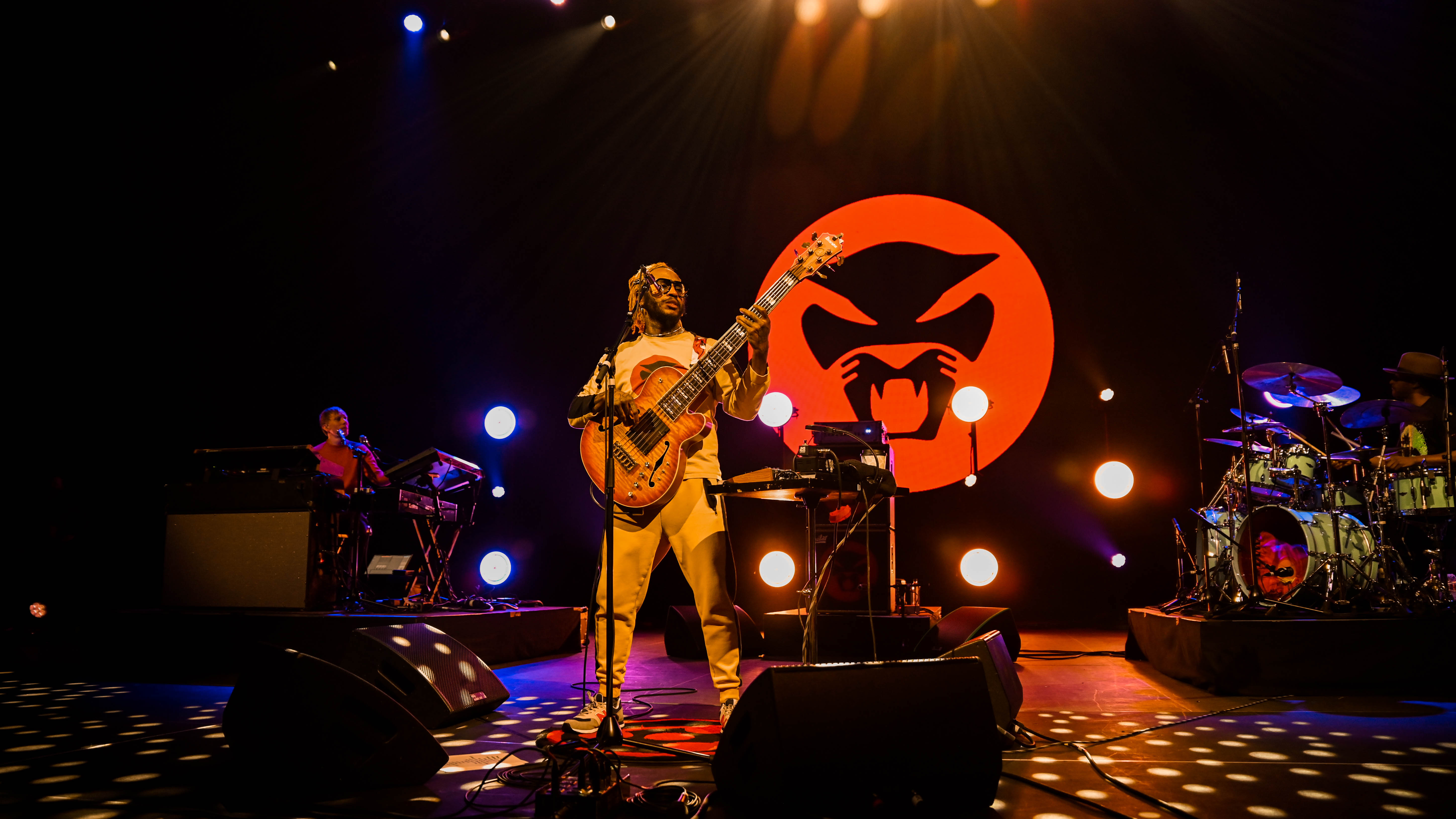
If you’ve heard any of hip-hop, R&B, or jazz that came out of Los Angeles last decade, it’s more than likely you’ve heard the bass playing or the falsetto of Thundercat even if he wasn’t credited as an official feature. His fingerprints were everywhere on songs from the west coast, and with good reason. As a bassist, Thundercat isn’t just a virtuoso, but he might be the biggest quasi-star on that instrument in quite some time—since Flea, I reckon—with an endless database of fat, dexterous grooves but with the ability to fire off a rapid, dazzling display of notes with a superhuman speed and precision. He’s also blessed with a distinctive voice, singing exclusively in a falsetto that felt unrestrained, always floating above his bass and cutting through the mix.
Thundercat, real name Stephen Bruner, was born into a musical family. His mother Pam Bruner was a flautist, and his father Ronald Bruner Sr. drummed for the Temptations, Gladys Knight, and the Supremes. The two raised three musicians: Jameel Bruner played keyboards for the Internet between 2013 and 2016, while Ronald Bruner Jr. followed in his father’s footsteps and became a drummer, notably for thrash metal band Suicidal Tendencies where he brought along a young Stephen Bruner, still in high school at the time, for the ride. The two Bruners would be Suicidal Tendencies’ rhythm section throughout the 2000s. And before that, Stephen Bruner already had a taste for the music industry as a member of the group No Curfew at the age of fifteen.
After Suicidal Tendencies, he started playing bass in the jazz group Young Jazz Giants, still with Ronald Bruner Jr., but also with a young Kamasi Washington on saxophone, about a decade before Washington became a household name. And at the turn of the decade, Thundercat started playing bass as a session player for R&B superstars like Erykah Badu, Bilal, and Miguel. But his most important partnership was Flying Lotus around that time, who pushed him to start singing. “It was Lotus’s suggestion that I sing,” Thundercat said to Georgia Straight. “It was him being like, ‘You have to sing in front of people, man. You can do it.’ And he introduced me to the idea of me being an artist like that. I took it very serious. It wasn’t my goal before to sing in front of people—it’s not something I set out to do. But it just became part of the package of me.”
