
Aaron Shaw
And So It Is

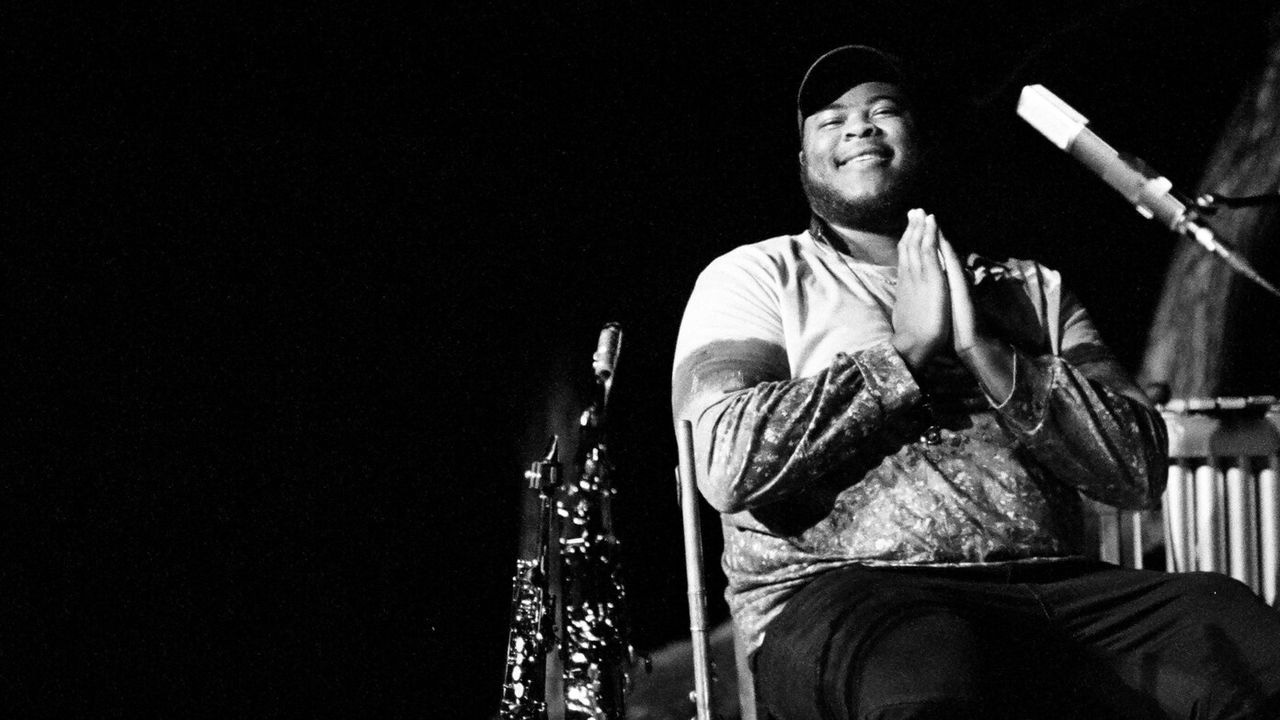
In 2023, 27-year old Los Angeles saxophonist Aaron Shaw received got a diagnosis of bone marrow failure which resulted in him no longer being able to produce enough oxygen to play music, his lifelong passion. “I had to change my entire mouthpiece setup. I had to change the way I played because I was short of breath. I couldn’t hold the back pressure. I had been developing this sound for 15 years, and suddenly I had to figure out a new way of playing,” he told Jorge Ceja Morán, “I didn’t initially set out to make an album just because I got sick. I approached music the way I always have — as the only way I know how to escape. But it was difficult. For a moment, I hated music. At my lowest, I felt like my life had amounted to nothing. The solitude was forced upon me, so I was trying to find my way out of that darkness.”
Debut album And So It Is is the result of Shaw adjusting to that diagnosis and re-learning how to play saxophone. The title feels important, notably not “And So It Goes,” but rather the more deliberate “And So It Is.” The album is spiritual jazz to its core, a journey as much an internal one as it is a cosmic one, and by turns, profoundly isolationist and uplifting as Shaw opens the doors and lets us witness his mental state during that difficult time of his life.
Any other jazz debut may have opened with a dazzling improvisation or clever composition or even a demonstration of their ability to lead a band. But what Shaw does on “Soul Journey” is none of that. Instead, the first two minutes stopped me short completely when I first heard the album in February this year. It’s a mournful prayer of a saxophone performance, multitracked so that it feels like a dialogue but really is Shaw’s internal monologue. Halfway through the song, his brother Lawrence Shaw (who has performed together with Aaron Shaw as the duo Black Nile) lays down a prickly bass-line as the song becomes propulsive, but in a way as if it’s uncertain what the future holds, but is still excited to greet it head-on.
Shaw’s debut arrives relatively late. Like Kamasi Washington—who mentored him—Shaw was a jazz player that made his splash on a rap record first, which was on Tyler, the Creator’s Cherry Bomb, and since then, he’s appeared on records by Weezer, R.A.P. Ferreira, and billy woods, and collaborated repeatedly with Carlos Niño who guides these songs, not just as a percussionist, but also as co-producer along with Shaw. Niño is the biggest name here, and frankly the other players have limited resumes (if any; I can’t find information on most of them), so it really does feel like Aaron Shaw’s show. The major exception is “Windows to the Soul,” where pianist Sam Reid (Google only pulls up results of the Canadian rock pianist of the same name) has a prominent presence and one of the best solos on the album. Love how Reid re-introduces the theme at 2:50, letting the melody linger in the air, letting his left hand do one final improvisation before finishing the theme and handing it back to Shaw.
Each song is wildly different in tone, tempo, spirit and style, which works to Shaw’s advantage early on but the album loses identity in its second half. The short “Echoes of the Heart” flirts dangerously close to movie soundtrack material not just in Shaw’s tone but also the harmonies: Lawrence Shaw’s bass comes in halfway through like a Hans Zimmer drone blast. Meanwhile, “Jubilant Voyage” takes a page from Shaw’s collaborations with Herbie Hancock for a flute-based funk track, but the funk ends up going nowhere (hey, just like so much Hancock) as the last 2 minutes teases a release that never arrives.
By contrast, “Heart of the Phoenix” is a slow-burning epic that the record could have used more of, reminiscent of “Soul Journey”’s reflection to rhythm but at a far grander scale, backing a multi-tracked performance from Shaw with psychedelic washes of harp (Merci B), dark shades of cello (Kiernan Weggler) and even mournful vocals (Dwight Trible) before the drums are finally introduced halfway through the 9-minute track. “The Path to Clarity” and “Never Catch Me Out of Alignment” capture the “anything goes” attitude of the Los Angeles scene, even if Trible’s performance on the latter is unfortunately histrionic, the song is clearly riffing on Flying Lotus’ classic collaboration with Kendrick Lamar. Meanwhile, the former has Niño embodying the ocean and incorporates birdsong in a very earth-bound track on an album otherwise occupied with the beyond.
Spiritual jazz has enjoyed a disproportionate amount of critical attention in recent years from non-jazz corners especially in comparison to jazz’s other subgenres — no one cares about hard bop or vocal jazz anymore, for example. I’m not just thinking of the massive acclaim for Floating Points’ collaboration with Pharaoh Sanders and Andre 3000’s debut album here, but also the overnight star-making of Kamasi Washington back in 2015, or how Shabaka and Nubya Garcia both broke through from the London jazz scene to an international audience. But despite spiritual jazz’s success in the last 10 years, and despite the fact that this album is very much better than a lot of those albums, And So It Is barely made any waves — regardless that it also has a strong narrative that helps critics/listeners get into an instrumental album. Which is not surprising, just disappointing. The debut album of what I hope to a major talent in modern jazz.
love this album so much i wrote about it as well