
Modest Mouse
You will come down soon too / You will come down too soon

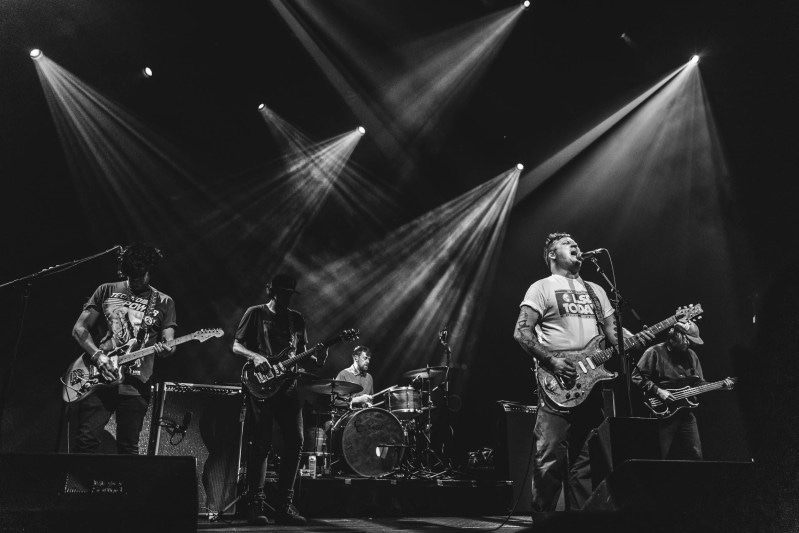
It was over the moment my high school ass heard “Broke” and “Bankrupt on Selling” because I was ready from those songs alone to declare Isaac Brock as the greatest lyricist of that era. As a lyricist, Brock is very interesting because he has a knack for stitching together clever lines that hung together in a broader verse because of an internal repetition (“Broke a-ccount so I broke a sweat”). In those early days, it really felt like he had dozens of notebooks of such scrawled lyrics. And the content of those lyrics never shied away from intimacy, connection, and thus, poignancy (“I still love her, loved her more / When she used to be sober / And I was kinder”), which set them apart from most indie bands around that time, whose lyrics were often more abstract and/or coached in irony.
As a singer, he could be feral as Pixies’ Frank Black, but interested in the human condition instead of absurd surrealism, contorting his voice in a way that communicated anger, terror, and disgust when he wasn’t sad at what’s been lost. Behind him, Jeremiah Green’s drums were constantly shifting, and ready to unload chaos when called upon in a way that felt like a jazz drummer armed with a rock drummer’s forearms, locking together with bassist Eric Judy in a tough tumble underneath Brock’s guitars. Brock played with a relatively unique sound: his guitar playing loaded with harmonics, played like a deranged version of midwest emo, but with plenty of drives thanks to big riffs and plenty of whammy bar. And something I don’t see mentioned at all is that they were the very rare case of a rock band that made use of turntables, albeit only on a few cuts, like the climax of “Never Ending Math Equation” or “Heart Cooks Brain” that was so effective that it really felt like more bands should have tried to incorporate scratches.
What’s really interesting is that this band, that everyone agreed was one of the greatest indie bands of the 1990s, that made the leap to the majors at the turn of the millennium on The Moon & Antarctica that didn’t compromise their values or sound, that scored a major hit in the 2000s whose guitar riff was among that instrument’s last moments in the mainstream sun, doesn’t seem fondly remembered at all. Or am I just projecting because I don’t personally listen to them anymore? Sure, their comeback material is among the most nothingburgers of comebacks. Sure, they were responsible for the worst live show I’ve ever seen when they opened for the Black Keys in 2019 where the Scotiabank Arena lights smothered them (why did they perform “Cowboy Dan,” the scariest indie song of that era, while bathed in pink flower lightning?) and Brock looked like he hated opening for a band that’s made infinitely more money than they ever did. (After they left, the confusion amongst the audience was practically palpable. A lot of people on Twitter that night from two camps, either people asking who the fuck they were, or fans asking why they neglected to play “Float On.” My wife assured me that they kicked ass at a smaller venue when she saw them before, and I believe her — they should ultimately never moved to the major leagues, and certainly never gotten big enough to play arenas.) Even “Float On” doesn’t seem like it really held on in the hearts of millennials the way contemporary “indie” hits like “Seven Nation Army,” “Take Me Out,” and “Mr. Brightside” still do. Maybe it’s just because I don’t drive as much as I used to, where their early albums made the most sense, and because I’m just not in the same emotional place that I was back in high school when I first discovered them. Like fellow 90s band Smashing Pumpkins, Modest Mouse seemed like a band best heard in the ages of 16-23 or so, and never again after that.
Brock, Green, and Judy formed Modest Mouse—whose name comes from the Virginia Wolf story, “The Mark on the Wall,” “very frequent even in the minds of modest mouse-coloured people”— in Issaquah, Washington. Issaquah is a 20-minute drive away from Seattle that’s considered part of the Seattle Metropolitan Area, but Brock was adamant that Modest Mouse was an Issaquah band, not a Seattle band, as a means of distancing themselves from Seattle grunge that had taken America by storm. (Despite the fact that both Modest Mouse and grunge share a fondness for loud-soft dynamics and many of the same influences.) They recorded the Blue Cadet-3, Do You Connect? EP and Sad Sappy Sucker for Calvin Johnson (of Beat Happening)’s label K Records, although Judy was not involved with either, replaced by John Wickhart and with additional guitar from on-again, off-again member Dann Gallucci. Four of five of the songs from Blue Cadet-3 can be found on Sad Sappy Sucker except for the 40-second introduction, so no one needs to look for it. Sad Sappy Sucker, on the other hand, was shelved and not released until 2001 when Modest Mouse had moved to the majors and the material explains why it never saw the light of day until everyone realized that people would start paying for it: it’s mostly lo-fi bullshit. (Calvin Johnson helped sing backing vocals or produce a lot of their material before they moved to the majors.)
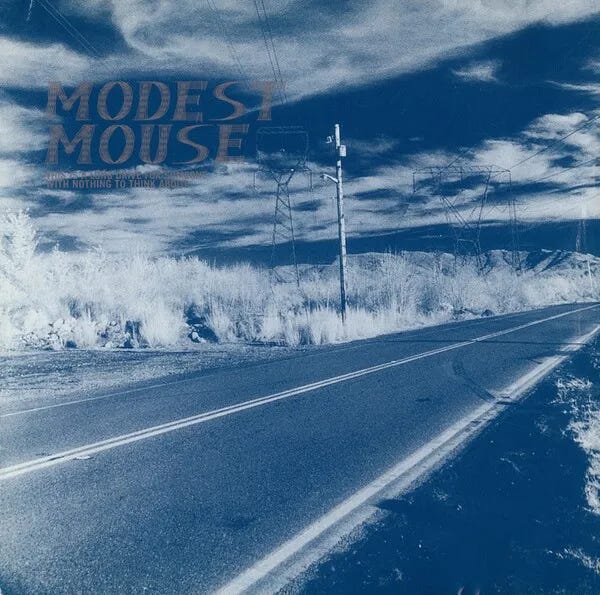
I genuinely wonder if actual debut album This Is a Long Drive for Someone With Nothing to Think About would be nearly as acclaimed if not for how well the title pairs with the music. It’s a solid debut that’s improved on all fronts by their sophomore album. For example, it’s hard to listen to “Make Everyone Happy / Mechanical Birds” as anything but a warm-up for “Styrofoam Boots / It’s Nice On Ice Alright.” What the album does have is atmosphere: it really does feel like driving around the suburbs and into the vast nothingness of strip malls, bland industrial buildings, and empty but convenient parking lots. Destinations like “Ohio” are arrived at and discovered to be no better than your starting point, as made plain by Brock’s observation that the state is, “Truly lonely, this place is flatter than it seems.” “Dramamine” is the fan-favourite opener that’s head-and-shoulders the best song on the album where Brock’s unique guitar style actually imitates the open space while being on the road. Beyond that, “Breakthrough” demonstrates their aptitude for a catchy pop chorus early on, Brock’s hiccup-shouted vocal of “She Ionizes & Atomizes” is best performance on the album, and I can only imagine how many times Animal Collective listened to his shredded vocal on “Beach Side Property” before they cut a very similar sound on “For Reverend Green.” The scratchy, scrappy instrumental stretches of “Exit Does Not Exist” and “Mechanical Birds” sound suspiciously similar to one another, and both are altogether too long. “Lounge,” a hodgepodge of chicken-scratch rhythm guitar straight out of Talking Heads circa More Songs About Buildings and Food with shouted rap vocals, is among the lesser tracks of Lonesome Crowded West but is a highlight here.
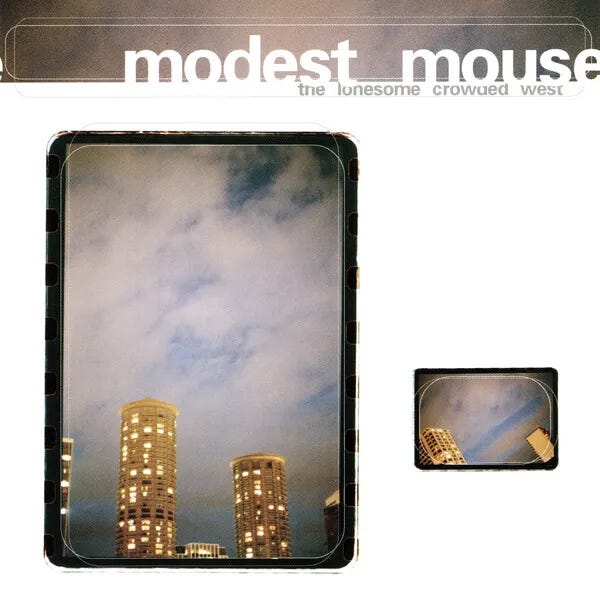
Lonesome Crowded West is their magnum opus. 74 minutes again, but the only songs I’d cut are “Shit Luck,” which is 2 minutes anyway and functions as a kick in the ass after the two slower ones immediately before and right before “Trucker’s Atlas,” the album’s longest song, as well as “Lounge.” (The vinyl version replaces “Lounge” with “Baby Blue Sedan” instead.) 64 minutes with those adjustments is still long, but the album is a sprawl that reflects, well, the North American sprawl once again as Brock’s lyrics talk of its malls (“soon to be ghost towns,” Brock muses prophetically on the opening track) and parking lots (“Waiting to bleed onto the big streets / That bleed out onto the highways / And off to others cities”), with a pre-millennium tension for atmosphere. A complaint: their songs don’t develop, often hitting their peaks early (as is the case for “Lounge”); oftentimes, songs sustain themselves through vibes alone, which is true of “Long Distance Drunk” (beautiful female vocal cutting through the din) and even highlight “Trailer Trash,” the album’s most tuneful and melancholy cut, just annoyingly repeats itself so the band could inexplicably stretch it to 6 minutes. The 90s era of CD bloat led to some really questionable decisions.
But there’s lots of good stuff to bite into. Brock’s screams throughout are among his best. He really commits to the opening lines of the album, and the “WELL” that leads us back into “Cowboy Dan”’s cracked skies truly sounds like a terrifying war cry, reinforced by the bootheel stomp of the percussion, and you should be scared: we’ve all seen Cowboy Dans out there, people who have been marginalized from just one unlucky day or life event; “He didn’t move to the city, the city moved to me / And I want out desperately” rattles in my head a lot these days walking around Toronto. The country fiddle of “Jesus Christ Was an Only Child” feels like you’re attending a country hoedown in a stifling small town and gives the album a lot of breathing space right where it needs it most. The shorter songs like that one and “Polar Opposites” suggest a bright alternate future in that genre, but I’m glad they didn’t bother since alt-country mostly sucks. “Bankrupt on Selling” is immaculately produced; the subtle electric guitar shading is just enough to give it some colour such that it’s not just any acoustic ballad. The transition between the two parts of “Styrofoam Boots / It’s Nice on Ice Alright” is executed perfectly, and Jeremiah Green’s drum workout is one for the indie ages. “God takes care of himself / And you of you” is one of Brock’s best Brockisms, and when it’s followed up with “It’s all nice, it’s all nice, it’s all nice, ON ICE, ALRIGHT,” it’s like hey, maybe it’ll be okay.
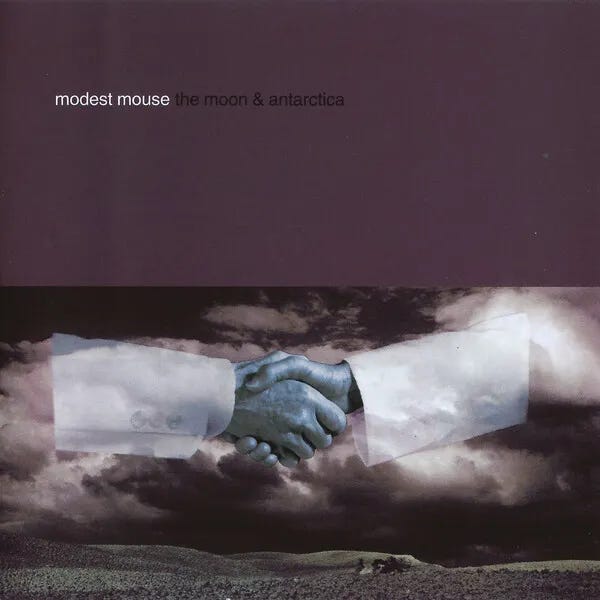
The Moon & Antarctica is a pretty dignified major label release by an indie band (though not as good as the Replacements’ Pleased to Meet Me, which the album cover seems to allude to), and modest success still came: “Gravity Rides Everything” was used for Nissan Quest minivan’s car commercial to help the band’s finances, just the pretty sonics and not the morbid lyrics, of course. The production is much cleaner and brighter thanks to outsider Califone’s Brian Deck, and the songs are by and large shorter than they used to be, which all makes for the perfect midway point between their two eras.
I used to love this album, and came into this write-up thinking I’d give it an ‘A-’ but listening to it for the first time in a decade, I find it hard to remember what I loved in the first place. The album doesn’t engage for me all the way through despite the hour-long relative concision because they lose the atmosphere of their first two records. Not helping is that Brock turns his attention away from the rural drives and towards the cosmos, but gives me far less to dwell on because his observations on life, death, the stars, and the universe are honestly banal. “The universe is shaped exactly like the earth / If you go straight long enough you’ll end up where you were” never hit me the way it’s supposed to—potentially because it just sounds factually incorrect to me given that the earth’s shape is stable while the universe is ever-expanding—and he just keeps fucking repeating it.
Oh yeah: despite the fact that most of these songs are shorter than before, he still repeats many of the same verses over and over. Like, “Dark Center of the Universe” is so repetitive that it feels like a song you’ll never need to hear more than once even if I do like it; both “3rd Planet” and “Gravity Rides Everything” just keep churning out the same choruses and pre-choruses. It would be different if Brock or the band did tiny modifications throughout but they don’t, so it ultimately feels like you’re listening to half a song twice over and over again.
It’s all getting too negative for an album I used to love, so the last things I’ll say is that the post-hardcore closer feels tacked on as a way to remind their fans that they’re the same when they won’t be at all very soon; “Tiny Cities Made of Ashes” predicts the dance-punk craze of the likes of LCD Soundsystem and the Rapture two-three years ahead of schedule with an addicting bass-line from Judy; “If you could be anything you want / I bet you’d be disappointed, am I right?” is one of Brock’s simplest heavy-hitters (but a lot of the other lines reach for poignancy and come up short), and I love the upbeat middle of “Lives” because it does indeed make it feel like you ending up where you were when the song inevitably returns to its sad hook.
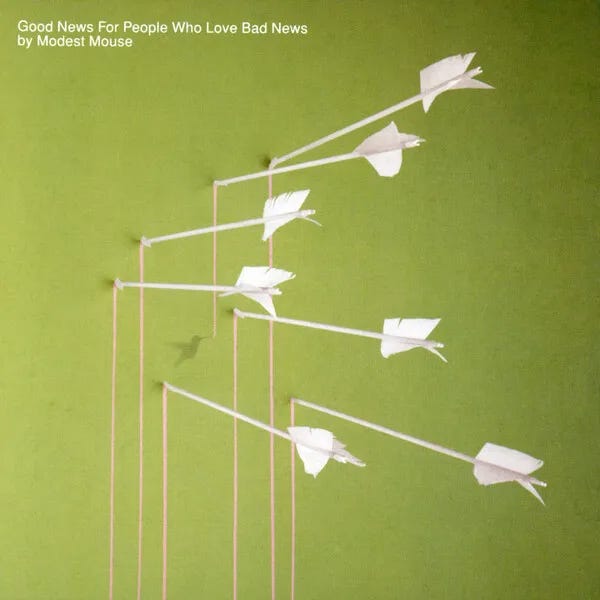
Good News for People Who Love Bad News is where the decline started. Years of smoking caught up to his vocals — Brock sounds like he’s straining a lot of the time. And though “You wasted life, why wouldn’t you waste the afterlife” is a good line, it’s emblematic of how Isaac Brock went from someone you would have seen entire verses quoted on Tumblr to someone whose mere one liners might be worth retweeting. The problems seem endless, like why they thought it would be a good idea to take the opening ten seconds of “This Devil’s Workday” and use it to announce the album, especially when it doesn’t even segue into the next song? Or why there are interludes at all, on this album, actually? Or why every time Isaac Brock switches to his chaotic vocals, it sounds like a pale imitation, and not like he’s trying to shock the system anymore? Or why Jeremiah Green started phoning it in? Where’s the chaos?
Yes, it has its charms. I retain a fondness for the “ice age heat wave” atmosphere of “The World at Large” although it’s exhibit A of said straining; I love the line “The moths beat themselves to death against the lights / Adding their breeze to the summer nights” which is the last glimpse of his genius; I like the lo-fi vocals during “Bukowski” that recall the Modest Mouse of old (though that the entire song is a set up for Brock to call God out for being a control freak is what I mean about him, lyrically); the banjo-led “Satin in a Coffin” is a good one; how sad it is that the choruses of “The Good Times are Killing Me”—the album’s best song, saved for last—beg you to sing along to them. As for “Float On,” I’ll never need to hear it again, and I hate the way Brock sings “I backed my car into a cop car” because it sounds like “I backed my car into a kaka” to me, but yeah, that riff is a good one, and it’s a surprisingly funky cut during a desperately unfunky time. And “The Ocean Breathes Salty” (which is sequenced immediately afterwards that makes the album feel all-too frontloaded) feels like a self-conscious effort to create another pop hit but everything that happens feels too clinical, and the “You missed” backing vocals, which is the song’s climax, sounds goofy, which is a word that would have never once applied to the band prior to 2004 but applies to at least half their discography moving forward.
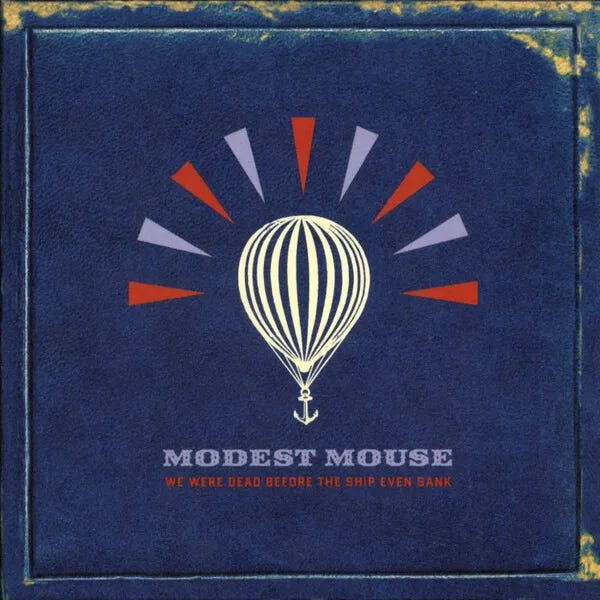
The decline only continued with We Were Dead Before the Ship Even Sank; “It honestly was beautifully bold, like trying to save an ice cube from the cold” is exactly what I mean about those one-liners — rhymes simple, sounds good, means nothing. Surprisingly though, We Were Dead’s problems are a lot harder to pinpoint than they were on Good News because they’re trying a lot harder. Even “Dashboard,” the blatant “Float On” re-write (it’s about floating on again), is deceivingly more complex with trumpets, strings, the switching between two different microphones, and that there’s two drummers at all now. Songs now have multiple parts like they used to do. Johnny Marr of the Smiths is here as an official member of the band to add half-melodic, half-twitchy guitar fills. James Mercer of the Shins contributes sunny backing vocals. (The Shins were basically the most undeserving band I could imagine to get a Hollywood boost from Garden State.) And they even tried to make a concept album before giving up halfway through where people were supposed to die of water-related deaths in every song.
But the songs are, here’s that word again, goofier than ever. “Florida” would be an unsalvageable mess if not for James Mercer helping the song connect with a catchy hook, and just because the song goes somewhere else for the last 40 seconds doesn’t really excuse the fact that those 40 seconds don’t sound good (by contrast, Mercer sounds lame on the funky cut “We’ve Got Everything”). “Spitting Venom” has those beautiful horns in the middle but is otherwise an unforgiveable time-sink, and even then, those horns have to contend with droning organ that feels out of place. Brocks writes himself into a corner on “People As Places As People” when he resolved to rhyme everything with the same sound. The charms are fewer than last time, namely the second half of “Parting of the Sensory” where the band starts dancing in anticipation that they’re going to die soon; “Missed the Boat,” which might be the band’s last good song; “Little Motel” despite the blatant Radiohead influence.
I was not bothered by Stranger to Ourselves, their first album in eight years, because their music had gotten steadily worse album over album. That at one point they teased jamming together with OutKast’s Big Boi was basically the nail in the coffin for any interest because, well, Big Boi hadn’t made any good solo music (happy to report those sessions never manifested), to say nothing of founding bassist Eric Judy’s departure. The cello-backed ballad title track is something you’d imagine by late-period Wilco, a band that got boring but never as embarrassing as Modest Mouse did, which is the better alternative. At its absolute best, the album feels like the band recycling sonics that have worked for them in the past: the opening lyric, “We’re lucky that we slept/ Didn’t seem like we realized we’d be stuck in traffic”—which is pure, detestable nostalgia bait, let’s be clear—reminds us this is the same band that made Dramamine; “Lampshades on Fire” feels like a bald-faced rewrite of any of the poppier cuts from their last two albums straight down to the chirpy “ba-ba-ba”’s; “The Ground Walks, with Time in a Box” is a dance-punk slammer akin to “Tiny Cities Made of Ashes.” At worst though, it’s the worst material the band has ever committed on tape by this point: “Pistol (A. Cunanan, Miami, FL. 1996)” sounds like absolute trash. The best song is the shortest one, probably for that reason alone.
The Golden Casket arrived six years later. Brock made a big deal about not playing guitars, but didn’t commit the same way John Darnielle did for Goths, but the band fill the empty space out with all manner of other instruments — every bandmember is credited with just about 20 instruments apiece. So they’re working hard as ever, but it nonetheless amounts in their worst album. “Transmitting Receiving” is supposed to be “the most important shit that I’ve written about,” according to Brocks but the digital voice that repeats the waterfall of nouns sounds lame as shit because the band is firmly an indie rock band and not an indietronica one. The marimba-led “The Sun Hasn’t Left” sounds like music made for the most insufferable TV show imaginable. “Lace Your Shoes” is supposed to be a touching song to Brock’s children, but he sings it like a vampire, dramatically whispering “I can’t wait to see you go to school” in a way that’s really fucking weird as the background instrumentation tries hard to imitate Tom Waits circa Swordfishtrombones. Brock’s lyrics seem important—“I gave the boat a person’s name / So when it sinks I’ll know who to blame”; “In India they make mugs, you throw them down, they turn to mud”; “You can never fuck a spider on a fly”—but fall apart just by listening to them with your ears. Side state of affairs from one of the best lyricists of that era.
Unlike, say, Cocteau Twins, the majority of Modest Mouse’s EPs were not important to their legacy — with one exception that I’ll save for last. But I appreciate that they released a steady stream of them between each album to keep fans satisfied. The Fruit That Ate Itself dropped right before they headed into the studio to record Lonesome Crowded West and is notable for the funky “Summer” because it articulates that pre-millennium tension that I talked about (“We’re all waiting for the year 2000”). Night on the Sun was fully absorbed into Everywhere and His Nasty Parlour Tricks which has the excellent “Night on the Sun” that seems weird to have been excluded from The Moon & Antarctica but also the lovely “So Much Beauty in Dirt” which, I believe, is the only Modest Mouse song that uses the Fender Rhodes. Elsewhere, “3 Inch Horses, Two Faced Monsters” has some impressively hideous fiddle going for it.
Unreleased tracks from Good News and We Were Dead were packaged together on the No One’s First, and You’re Next EP that honestly would have made for a good-enough swan song if it were the last thing the band ever released in 2009. Some of the material is frankly better than the bottom-tier chaff that made it to the two albums before it, particularly “Satellite Skin,” a catchy pop number in the vein of “Float On” and “Dashboard,” and “I’ve Got It All (Most),” the b-side to “Float On” even if the heavy parts don’t come off. Brock sounds like he’s having fun, vocally, on “Guilty Cocker Spaniels” and “King Rat,” the latter of which had a music video that was directed by then-recently-departed Heath Ledger. And I love the drunken sway of the horns of “Perpetual Motion Machine.” A few good lines scattered throughout: “Just like being my own solar system / Doing good things but then totally eclipse them”; “How can someone inconsistent / Mess up so consistently?”
The exception to the EPs is Interstate 8. Most of its studio tracks would be combined with key non-album singles and packaged up as the Building Nothing Out of Something, a compilation that is actually the band’s second-best ever release behind Lonesome Crowded West. “Never Ending Math Equation”’s climax might be utterly meaningless—“I told my dad what I need / Well, I know what I have and want / But I don't know what I need / Well, he said, he said, he said, he said”—but it comes out of the repeated verse-chorus prior (it’s repeated because it’s never ending, you see) in a way that I find utterly thrilling, specifically because of the aforementioned turntable scratching, and the verses have a strong melodic bend to them (“Oh my G-o-d”). The prettier parts of “Workin’ on Leavin’ the Livin’” predict Explosions in the Sky in the twinkle of the guitar and the martial snap of Green’s drums; just remove the vocals and you’ll see what I mean. The choruses of “Baby Blue Sedan” might be their most touching, which is truly saying something. “A Life of Arctic Sounds” is utterly ridiculous, but it ends with an upbeat rally despite all that wasted travel time.
Best of all is “Broke,” which was one of the first Modest Mouse songs I ever heard after hearing “Float On” when I backtracked through their discography, which I loved the moment I heard it, and that I still think fondly of to this day. It’s a lo-fi masterpiece that I’d rank ahead of anything by Guided by Voices or early (lo-fi) Pavement (daily PSA: Slanted & Enchanted is their second-worst album). There’s a genuine warmth that comes through in lo-fi-ness that functions as a genuine hug that Brock’s character can’t bring himself up to muster in the lyrics, while simultaneously also dampening the guitar lines that would otherwise be too bright in tone. The rhythm of the breakage—“Broke account so I broke a sweat”; “Broke your glasses but it broke the ice.” “Broken hearts want broken necks”; “Broke my pace and ran out of time”; “Broke a promise cause my car broke down”; “Broke up, and I’m relieved somehow”—plays like a mini-narrative that Brock manages to write in just 2 minutes and 30 seconds so the band could exorcise that heartbreak in the climax; “You’re living on fancy wine / You’ll drink that turpentine,” he seethes as the song ends. I must have played that song upwards of 100 times when I heard it in high school, and unlike all of the other songs that I cherished back then, which includes so many other Modest Mouse songs, it doesn’t embarrass me to listen to now.
Studio Albums:
This Is a Long Drive for Someone With Nothing to Think About - B+
Lonesome Crowded West - A
The Moon & Antarctica - B+
Sad Sappy Sucker - C
Good News for People Who Love Bad News - B-
We Were Dead Before the Ship Even Sank - B-
Stranger to Ourselves - C+
The Golden Casket - F

Extras:
Blue Cadet-3, Do You Connect? - C
Interstate 8 - B+
The Fruit That Ate Itself - B
Night on the Sun / Everywhere and His Nasty Parlour Tricks - B+
No One’s First, and You’re Next - B

Compilations:
Building Nothing Out of Something - A-
Awesome piece! Love how honestly (and relatably) this reckons with having loved this band but finding yourself out of step with them since your early 20s — plus I agree with the vast majority of your takes. Some standouts:
- Exit Does Not Exist *is* too long but woof, that's one of their gnarliest guitar workouts ever
- Custom Concern and Talking Shit... have always trumped Dramamine for me, but no denying that song does everything right
- Debut Lounge is a winner while LCW Lounge is a slight lowlight 100%
- Not nearly enough people talk about how much of a lyrical downgrade The Moon and Antarctica was, very much agreed that it goes way too hard on wishy-washy grasps at the profound (though for me, 3rd Planet is one moment this largely connects (along with Life Like Weeds) whereas Lives is its worst blunder)
- I was listening to that early run of Good News songs the other day, first attention I've given MM in years — definitely a top-heavy album, though One Chance always pulled its weight for me. C'mon though, Float On has some of Brock's best Pixies-isms vocally (love CO-CAaa haha)
- Used to have a big soft spot for WWD... given how ambitious it was after Good News' dialled-in indie, but it's aged dubiously and your take on Florida (horrible song) is exactly why. Your take about being half-concept and half-people recurrently drowning made me laugh. Spitting Venom deserves a tad more love though!
- Not much to add for the last two LPs other than that Never Fuck a Spider on the Fly is perhaps the sole moment in their discog (unless you count Shit Luck) that hits full-on So Bad It's Good Territory for me — absolute meltdown of a song, love how the godawful title cements that appeal in just the same way that you caught how Long Drive's title gives it an instant leg-up
Sad Sappy Sucker may be lofi bullshit, but there are some serious tunes on there (Point A To Point B, It Always Rains, Classy Plastic Lumber etc.)